
Many digital marketing agencies appear successful on the surface. They manage multiple clients, generate recurring monthly revenue, and consistently bring in new projects. Yet many agency owners face the same challenge at the end of every month: there is very little cash left in the bank.
A common scenario is that an agency invoices clients regularly, but after paying salaries, software subscriptions, advertising tools, freelancers, office expenses, and taxes, profits seem to disappear. Revenue increases, but financial stress remains.
This is where Profit First Accounting can make a significant difference.
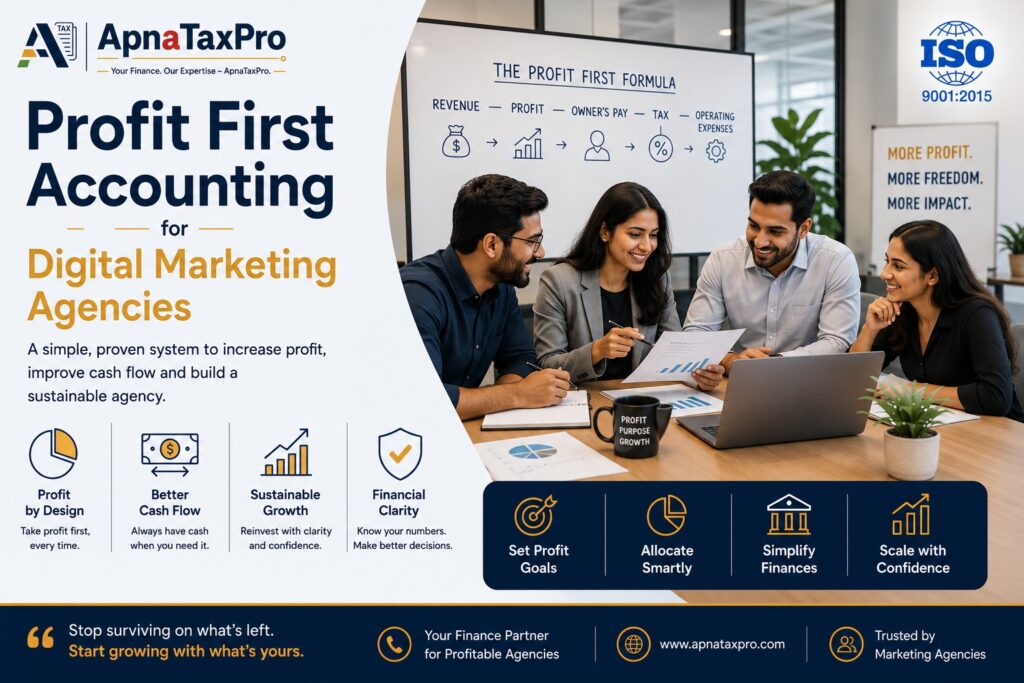
Profit First is a cash management methodology that helps business owners prioritize profit before spending. Instead of hoping there will be profit at the end of the year, businesses allocate profit from every payment they receive.
For digital marketing agencies operating in a competitive and rapidly changing environment, this approach can create stronger cash flow, better financial discipline, and sustainable growth.
What Is Profit First Accounting?
Profit First Accounting is a financial management system developed to help businesses manage cash more effectively.
Traditional accounting follows this formula:
Sales – Expenses = Profit
Profit First reverses the equation:
Sales – Profit = Expenses
Under this approach, a portion of every client payment is allocated to profit first. The remaining amount is then used for operating expenses.
The objective is simple:
- Ensure profitability becomes intentional
- Control unnecessary spending
- Improve cash flow visibility
- Create financial stability
- Reduce dependence on credit or loans
For service-based businesses such as digital marketing agencies, this method can be highly effective because revenue often fluctuates from month to month.
Why Digital Marketing Agencies Often Struggle with Profitability
Many agencies generate impressive revenue but still experience financial challenges.
Common Reasons Include:
1. Overdependence on Revenue Growth
Agency owners often focus exclusively on increasing sales. However, growing revenue without controlling expenses can reduce profit margins.
2. High Software and Subscription Costs
Marketing agencies frequently pay for:
- SEO tools
- CRM systems
- Design software
- Automation platforms
- Analytics tools
- Project management applications
Without monitoring utilization, these expenses can quickly increase.
3. Freelancer and Contractor Costs
Many agencies rely on freelancers for:
- Content writing
- Graphic design
- Video editing
- Paid advertising management
- Web development
Project costs can rise faster than revenue if pricing is not reviewed regularly.
4. Poor Cash Flow Planning
Some agencies collect payments late while continuing to pay salaries and vendors on time, creating cash flow pressure.
5. Lack of Financial Reporting
Without regular financial reporting and bookkeeping, owners often make decisions based on bank balances rather than actual financial data.
How Profit First Works for Digital Marketing Agencies
The Profit First system typically involves separating business funds into different accounts.
Typical Allocation Categories
| Account | Purpose |
|---|---|
| Income Account | All client payments received |
| Profit Account | Reserved profit allocation |
| Owner’s Pay Account | Owner compensation |
| Tax Account | GST, Income Tax, TDS obligations |
| Operating Expenses Account | Daily business expenses |
Whenever client payments are received, percentages are allocated to each account.
Example
Assume a digital marketing agency receives ₹5,00,000 from clients.
A simplified allocation may look like:
| Category | Percentage | Amount |
| Profit | 10% | ₹50,000 |
| Tax Reserve | 15% | ₹75,000 |
| Owner Compensation | 35% | ₹1,75,000 |
| Operating Expenses | 40% | ₹2,00,000 |
The business now operates within the available expense budget rather than spending first and hoping profit remains later.
Benefits of Profit First Accounting for Marketing Agencies
Better Cash Flow Control
Agency owners gain a clearer understanding of available cash and future obligations.
Consistent Profitability
Profit becomes a regular business habit instead of an annual surprise.
Easier Tax Management
By allocating tax funds throughout the year, businesses avoid last-minute tax payment stress.
Improved Financial Decision-Making
Business decisions become based on actual financial reports rather than assumptions.
Reduced Financial Anxiety
Knowing that profit, taxes, and owner compensation are already reserved provides greater confidence.
Implementing Profit First in Your Agency
Step 1: Review Current Financial Performance
Analyze:
- Monthly revenue
- Gross profit
- Payroll expenses
- Software costs
- Freelancer payments
- Tax liabilities
A clear financial baseline is essential.
Step 2: Create Separate Bank Accounts
Separate accounts help prevent accidental overspending.
Step 3: Establish Allocation Percentages
Every agency is different.
Allocation percentages should depend on:
- Revenue level
- Team size
- Service offerings
- Profit targets
Step 4: Conduct Regular Allocation Transfers
Many agencies transfer funds weekly or twice monthly.
Consistency is more important than frequency.
Step 5: Monitor Financial Reports
Review:
- Profit & Loss Statement
- Cash Flow Reports
- Balance Sheet
- Client Profitability Reports
These reports provide insight into business performance.
Profit First vs Traditional Accounting
| Factor | Traditional Accounting | Profit First Accounting |
| Profit Treatment | Residual amount | Priority allocation |
| Spending Behavior | Reactive | Controlled |
| Cash Management | Often unclear | Structured |
| Tax Planning | Frequently delayed | Proactive |
| Financial Discipline | Moderate | High |
For agencies seeking sustainable growth, Profit First creates stronger financial accountability.
Common Mistakes When Applying Profit First
Using Unrealistic Percentages
Aggressive allocations can create operational challenges.
Ignoring Financial Reports
Profit First complements accounting—it does not replace bookkeeping and reporting.
Mixing Personal and Business Finances
Separate business accounts are essential.
Failing to Review Expenses
Businesses must still evaluate subscriptions, software, and vendor costs regularly.
Not Planning for Growth
As agencies scale, allocation percentages should be adjusted.
How Virtual CFO Services Strengthen Profit First Implementation
Many agency owners understand the concept but struggle with execution.
A Virtual CFO can help by:
- Creating allocation strategies
- Monitoring cash flow
- Preparing financial reports
- Forecasting revenue
- Improving pricing models
- Managing budgets
- Supporting tax planning
This ensures the Profit First system aligns with overall business goals.
Why Choose ApnaTaxPro
Implementing Profit First Accounting requires accurate financial data and disciplined accounting processes.
ApnaTaxPro helps digital marketing agencies and service businesses through:
- Accounting Services
- Bookkeeping Services
- Outsourced Accounting
- Online Accounting
- GST Return Filing
- Income Tax Filing
- TDS Compliance
- Payroll Services
- Financial Reporting
- Business Compliance
- Startup Registration
- Company Registration
- ROC Compliance
- Virtual CFO Services
- Business Advisory Services
Businesses looking for Accounting Services in Indore, Bookkeeping Services in Indore, GST Consultant in Indore, or Tax Consultant in Indore can benefit from professional financial systems that improve profitability and business performance.
Our objective is not just compliance but helping business owners understand their numbers and make informed decisions.
Frequently Asked Questions (FAQs)
1. What is Profit First Accounting?
Profit First Accounting is a cash management method that allocates profit before expenses, helping businesses improve profitability and financial discipline.
2. Is Profit First suitable for digital marketing agencies?
Yes. Marketing agencies often have fluctuating revenue and multiple recurring expenses, making Profit First highly effective.
3. How much profit should an agency allocate?
The percentage varies depending on agency size, revenue, and financial goals. A financial review is recommended before implementation.
4. Does Profit First replace accounting software?
No. It works alongside accounting systems and bookkeeping processes.
5. Can small agencies use Profit First?
Absolutely. Small agencies often benefit the most because they gain better control over cash flow.
6. How often should allocations be made?
Most businesses allocate funds weekly, bi-weekly, or whenever significant client payments are received.
7. Why is a tax account important?
A dedicated tax account ensures funds are available for GST, TDS, and Income Tax obligations.
8. Can a Virtual CFO help implement Profit First?
Yes. Virtual CFO Services can help determine allocation percentages, monitor performance, and improve overall financial management.
Conclusion
Digital marketing agencies often focus heavily on client acquisition and revenue growth while overlooking profitability. Profit First Accounting changes this mindset by making profit a priority from day one.
By creating structured allocations for profit, taxes, owner compensation, and operating expenses, agencies can improve cash flow, reduce financial stress, and build a stronger foundation for long-term growth.
Whether you operate a startup agency or an established marketing firm, implementing Profit First principles can help transform the way you manage money and make business decisions.
Call to Action
Want to improve profitability and cash flow in your digital marketing agency?
Contact ApnaTaxPro today for expert Accounting Services, Bookkeeping Services, Financial Reporting, GST Compliance, Tax Planning, and Virtual CFO Services. Our team can help you implement practical financial systems that support sustainable business growth.