
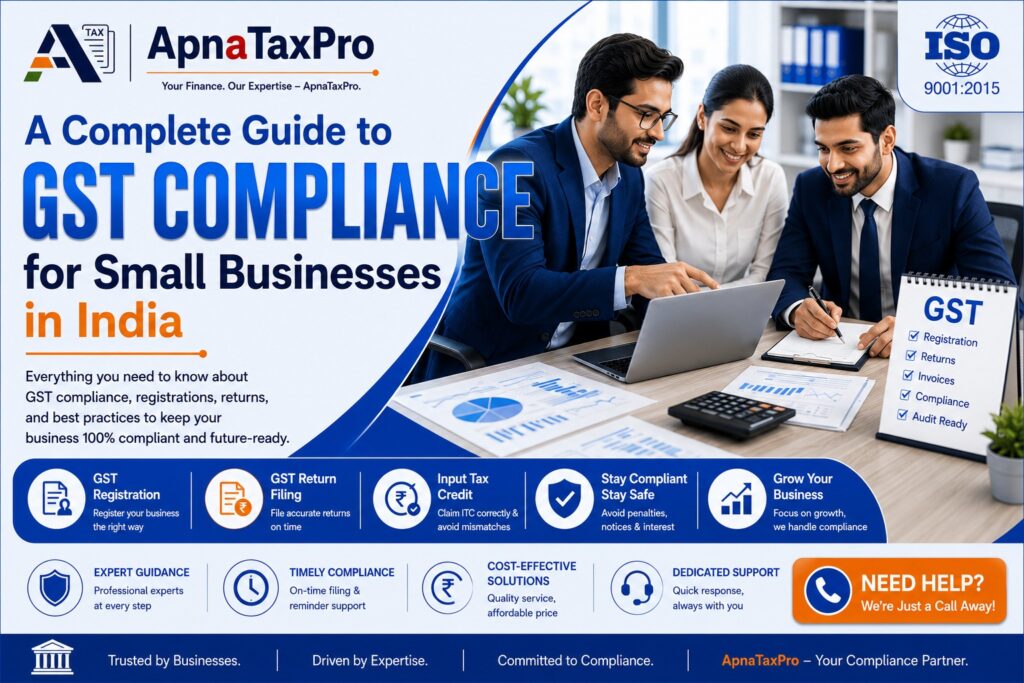
Running a business in India involves much more than selling products or delivering services. Whether you are a startup founder, trader, manufacturer, freelancer, service provider, or MSME owner, staying compliant with tax regulations is equally important for long-term business success.
Many business owners begin with enthusiasm but soon realize that managing GST Registration, filing monthly or quarterly returns, maintaining accounts and records, reconciling invoices, and meeting statutory deadlines can become challenging. Missing a filing date or maintaining incorrect records can lead to penalties, interest, blocked Input Tax Credit (ITC), and unnecessary notices from the tax department.
For example, imagine a small manufacturing business that has grown rapidly over the last year. While sales have increased, the owner has not maintained proper bookkeeping, purchase records, or GST reconciliations. At the time of filing annual returns, mismatched invoices and missing documentation create compliance issues that could have been avoided with systematic accounting and timely GST management.
This is why GST compliance should not be viewed as just another legal requirement. It is an essential part of efficient business management. Proper compliance improves financial transparency, supports better decision-making, builds trust with customers and suppliers, and helps businesses grow confidently.
In this comprehensive guide, you will learn everything about GST compliance for small businesses in India, including registration, invoicing, return filing, record maintenance, common mistakes, and practical tips to stay compliant throughout the year.
Why GST Compliance Matters for Small Businesses
GST compliance is more than filing returns on time. It is a complete process that ensures your business follows tax laws while maintaining accurate financial information.
Businesses that follow proper GST compliance generally benefit from:
- Better financial management
- Smooth claim of Input Tax Credit (ITC)
- Reduced risk of tax notices
- Improved credibility with customers
- Easier access to business loans
- Better investor confidence
- Simplified annual audits
- Stronger business reputation
Whether you operate a retail shop, manufacturing unit, consultancy, digital agency, or online business, proper ACCOUNTING, BOOKKEEPING, and GST compliance work together to build a financially healthy organization.
Understanding GST Compliance
What is GST Compliance?
GST compliance refers to all activities required to comply with Goods and Services Tax laws in India.
These activities include:
- GST Registration
- Issuing GST-compliant tax invoices
- Maintaining accurate account and records
- Filing GST returns
- Paying GST on time
- Reconciling Input Tax Credit
- Preserving business documents
- Responding to notices, if any
Compliance is an ongoing process rather than a one-time activity.
Who Needs GST Compliance?
GST compliance applies to various types of businesses, including:
Startups
New startups registering under GST should maintain proper bookkeeping from the very beginning.
Traders
Retailers and wholesalers must record purchases, sales, stock movement, and tax invoices accurately.
Manufacturers
Manufacturers usually deal with multiple suppliers and Input Tax Credit. Regular reconciliation becomes essential.
Service Providers
Consultants, agencies, software companies, architects, freelancers, and professionals providing taxable services should comply with GST requirements.
E-commerce Sellers
Businesses selling through online marketplaces have additional GST responsibilities and reporting requirements.
MSMEs
Small and medium enterprises benefit significantly from structured GST compliance and professional accounting support.
Step 1: GST Registration
One of the first steps toward GST compliance is obtaining GST Registration if your business meets the prescribed eligibility criteria under GST law.
Businesses may require GST registration due to:
- Turnover limits prescribed under GST
- Interstate supply of goods or services
- Selling through e-commerce platforms
- Voluntary registration for business growth
- Other applicable legal requirements
A valid GST registration enables businesses to:
- Collect GST legally
- Issue tax invoices
- Claim Input Tax Credit
- Build credibility
- Expand operations across India
Many startups also complete New Company Registration in Indore, Gumasta Udyham, and GST Registration together to ensure smooth business operations from day one.
Step 2: Maintain Proper Accounting and Records
One of the most common reasons businesses receive GST notices is poor documentation.
Maintaining proper ACCOUNT AND RECORDS helps businesses:
- Track sales
- Monitor purchases
- Record expenses
- Verify Input Tax Credit
- Prepare GST returns
- Support audits
Essential records include:
- Sales Register
- Purchase Register
- Tax Invoices
- Debit Notes
- Credit Notes
- Expense Records
- Bank Statements
- Stock Register
- E-way Bills (where applicable)
- Payment Receipts
Professional BOOKKEEPING ensures these records remain accurate throughout the financial year.
Many businesses searching online for an ACCOUNTANT OFFICE NEAR ME are actually looking for experienced professionals who can maintain reliable accounting records while ensuring GST compliance.
Importance of Professional Accounting
Good ACCOUNTING is the foundation of GST compliance.
Without proper accounting:
- GST returns become inaccurate.
- ITC reconciliation becomes difficult.
- Business decisions rely on incomplete data.
- Cash flow planning suffers.
- Financial reporting becomes unreliable.
On the other hand, systematic accounting provides:
- Real-time business insights
- Better budgeting
- Improved compliance
- Faster loan processing
- Accurate tax calculations
- Better profitability analysis
Modern businesses increasingly prefer Outsourced Accounting, Online Accounting, and cloud-based bookkeeping solutions to save time and improve efficiency.
Step 3: Issue GST-Compliant Tax Invoices
Every registered business must issue invoices that comply with GST regulations.
A GST invoice generally contains:
- GSTIN of supplier
- Invoice number
- Invoice date
- Customer details
- Description of goods/services
- HSN/SAC codes (where applicable)
- Taxable value
- CGST
- SGST
- IGST (where applicable)
- Total invoice amount
Incorrect invoicing may result in reconciliation issues and delays in claiming Input Tax Credit.
Businesses should use reliable accounting software to generate GST-compliant invoices automatically and maintain consistency in financial records.
Step 4: File GST Returns on Time
GST Return Filing is one of the most important aspects of GST compliance. Once your business is registered under GST, you are required to file applicable GST returns within the prescribed due dates, even in cases where there are no business transactions during a particular tax period (where applicable).
Timely filing helps businesses:
- Avoid late fees and interest
- Maintain a good compliance record
- Claim eligible Input Tax Credit (ITC)
- Build credibility with customers and vendors
- Reduce the chances of receiving GST notices
The type of GST return depends on your business category and the scheme under which you are registered. Since filing requirements can change over time, businesses should verify the latest return obligations applicable to them.
Practical Tip
Create a monthly compliance calendar that includes:
- Invoice preparation
- Purchase reconciliation
- Sales reconciliation
- GST payment
- Return filing
- Record backup
Maintaining a fixed schedule reduces last-minute errors and improves compliance.
Step 5: Reconcile Input Tax Credit (ITC)
Input Tax Credit is one of the biggest advantages of the GST system. However, claiming ITC requires proper documentation and reconciliation.
Businesses should regularly compare:
- Purchase invoices
- Supplier-uploaded invoices
- Accounting records
- GST return data
Regular reconciliation helps identify:
- Missing invoices
- Duplicate entries
- Incorrect GST amounts
- Supplier filing issues
- Data entry mistakes
Ignoring reconciliation can lead to blocked tax credits and unnecessary tax demands.
Best Practices for ITC Management
- Collect tax invoices promptly.
- Verify supplier GST details.
- Match purchase records periodically.
- Maintain digital copies of invoices.
- Resolve discrepancies before filing returns.
Step 6: Maintain Proper Books of Accounts
GST compliance does not end with return filing. Every business should maintain organized financial records throughout the financial year.
Proper ACCOUNTING, BOOKKEEPING, and ACCOUNT AND RECORDS management support:
- GST compliance
- Income Tax Filing
- Financial Reporting
- Business loan applications
- Internal decision-making
- Statutory audits
- Business valuation
Essential business records include:
- Sales register
- Purchase register
- Expense ledger
- Cash book
- Bank book
- Inventory records
- Fixed asset register
- GST invoices
- Payment vouchers
- Vendor records
- Customer records
Digital record management is recommended because it improves accessibility, reduces paperwork, and simplifies compliance.
GST Compliance Checklist for Small Businesses
Use this checklist every month to stay compliant.
| Compliance Activity | Recommended Frequency |
|---|---|
| Record all sales transactions | Daily |
| Record purchase invoices | Daily |
| Update bookkeeping | Weekly |
| Reconcile bank transactions | Monthly |
| Verify GST invoices | Monthly |
| Reconcile Input Tax Credit | Monthly |
| File GST Returns | As applicable |
| Pay GST liability | Within due dates |
| Review financial reports | Monthly |
| Backup accounting data | Monthly |
Following a structured checklist minimizes compliance risks and improves business efficiency.
Common GST Compliance Mistakes to Avoid
Many small businesses receive notices not because of intentional non-compliance, but due to avoidable mistakes.
1. Delaying GST Registration
Businesses sometimes postpone GST Registration even when they become liable to register.
2. Missing Return Due Dates
Late filing results in penalties, interest, and additional compliance challenges.
3. Poor Bookkeeping
Incomplete BOOKKEEPING often leads to incorrect GST calculations and reporting errors.
4. Incorrect Tax Invoices
Invoices with missing or inaccurate information can affect ITC claims.
5. Ignoring Invoice Reconciliation
Failure to reconcile purchase and sales data may result in tax mismatches.
6. Not Maintaining Supporting Documents
Businesses should preserve invoices, contracts, payment proofs, and related records for future reference and audits.
7. Depending Only on Manual Records
Manual processes increase the likelihood of calculation errors and missing entries. Using accounting software or professional accounting services can significantly improve accuracy.
Consequences of GST Non-Compliance
Ignoring GST compliance can have financial and operational consequences.
Possible outcomes include:
- Late fees
- Interest on delayed payments
- Notices from tax authorities
- Difficulty claiming Input Tax Credit
- Business reputation risks
- Delays in loan approvals due to incomplete financial records
- Increased time spent responding to compliance issues
Preventive compliance is generally more efficient and cost-effective than correcting errors after notices are received.
Practical GST Compliance Tips for Small Businesses
Following simple practices can make GST compliance much easier.
Keep Business and Personal Finances Separate
Maintain dedicated business bank accounts and avoid mixing personal transactions with business expenses.
Update Books Regularly
Daily or weekly bookkeeping is easier than preparing records at the end of the month.
Store Digital Documents
Maintain organized digital copies of invoices, purchase bills, agreements, and payment receipts.
Review Financial Reports
Monthly financial reporting helps identify unusual expenses, tax liabilities, and cash flow concerns before they become larger issues.
Work with Qualified Professionals
Experienced accounting professionals can help ensure compliance, maintain accurate records, and provide practical business advice.
GST Compliance for Different Types of Businesses
StartupsBUS
Startups should establish proper accounting systems from the beginning. Integrating Startup Registration, GST Registration, and organized bookkeeping creates a strong compliance foundation.
Retail Businesses
Retailers should focus on inventory management, sales recording, and invoice accuracy to support smooth GST reporting.
Manufacturers
Manufacturers should regularly reconcile purchase invoices, inventory records, and production data to manage Input Tax Credit effectively.
Service Providers
Consultants, agencies, IT companies, designers, architects, and freelancers should issue GST-compliant invoices and maintain detailed service records.
E-commerce Sellers
Businesses selling through online marketplaces should carefully reconcile marketplace reports with their accounting records and GST returns.
Why Choose ApnaTaxPro?
Managing GST compliance alongside day-to-day business operations can be time-consuming. Having a reliable compliance partner allows business owners to focus on growth while ensuring statutory obligations are handled accurately.
ApnaTaxPro supports startups, MSMEs, traders, manufacturers, service providers, and growing businesses with practical and professional financial solutions. Our approach emphasizes accuracy, transparency, and timely compliance rather than one-time filing.
Our services include:
- Accounting Services for organized financial management
- Bookkeeping Services with accurate maintenance of business records
- GST Registration and ongoing GST compliance support
- GST Return Filing assistance
- Income Tax Filing for businesses and professionals
- Professional Tax compliance (where applicable)
- Payroll Services for employee salary and statutory management
- Business Registration support, including New Company Registration in Indore
- Guidance for Gumasta and Udyam (MSME) registrations
- ROC Compliance for companies and LLPs
- Virtual CFO Services for strategic financial planning
- Financial Reporting and MIS reporting
- Business Advisory to support informed decision-making
Businesses looking for Accounting Services in Indore, Bookkeeping Services in Indore, GST Consultant in Indore, Tax Consultant in Indore, or even searching online for an Accountant Office Near Me often require more than basic return filing. They benefit from integrated accounting, compliance, and advisory services that help them stay compliant while planning for sustainable growth.
Whether you are launching a new venture, expanding an existing business, or strengthening your compliance processes, APNA TAX PRO aims to provide practical, dependable support tailored to your business needs.
Frequently Asked Questions (FAQs)
1. Is GST registration mandatory for every small business?
No. GST registration depends on factors such as turnover limits, the nature of business activities, interstate supplies, e-commerce participation, and other legal provisions. Businesses should evaluate their specific obligations under the GST law.
2. What happens if I file my GST return late?
Late filing may lead to applicable late fees, interest, and compliance issues. Timely filing helps maintain a good compliance record.
3. Why is bookkeeping important for GST compliance?
Proper BOOKKEEPING ensures that sales, purchases, expenses, and tax records are accurate, making GST return filing and reconciliations more reliable.
4. What records should a business maintain for GST?
Businesses should maintain sales registers, purchase registers, invoices, expense records, bank statements, inventory records, payment vouchers, and other relevant supporting documents.
5. Can I claim Input Tax Credit without proper invoices?
Input Tax Credit is generally subject to the conditions prescribed under the GST law, including the availability of valid tax invoices and fulfillment of other applicable requirements.
6. How often should businesses review their GST compliance?
A monthly review is a practical approach for most businesses, helping identify discrepancies and complete necessary compliance activities on time.
7. Should startups outsource accounting?
Many startups choose Outsourced Accounting because it provides access to professional expertise, improves compliance, and allows founders to focus on core business operations.
8. How can ApnaTaxPro help my business?
ApnaTaxPro offers accounting, bookkeeping, GST compliance, Income Tax Filing, payroll, business registration, ROC compliance, financial reporting, and business advisory services designed to support businesses at different stages of growth.
Conclusion
GST compliance is not merely about submitting returns before the due date—it is an ongoing process of maintaining accurate records, issuing compliant invoices, reconciling Input Tax Credit, and following statutory requirements consistently. Businesses that invest in organized accounting and timely compliance are better positioned to reduce risks, improve financial transparency, and make informed decisions.
Whether you are a startup, MSME, trader, manufacturer, freelancer, or service provider, building strong compliance practices today can contribute to smoother operations and sustainable business growth in the future.
Call to Action
Looking for reliable support with GST Registration, GST Return Filing, Accounting, Bookkeeping, Professional Tax, Income Tax Filing, Payroll Services, Virtual CFO Services, Business Registration, or ongoing Business Compliance?
ApnaTaxPro is here to help. Our experienced team provides practical, compliance-focused solutions tailored to the needs of startups, MSMEs, and growing businesses.
Contact ApnaTaxPro today to discuss your business requirements and take the next step toward accurate accounting, timely GST compliance, and stronger financial management.